
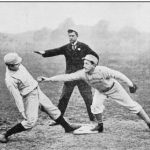
The World Baseball Classic (WBC) is the biggest international baseball tournament in the world. Think of it as the “World Cup of baseball”, where the best professional players represent their home countries instead of their MLB teams. First played in 2006, and held about every four years, it features many MLB stars playing for their national teams. Tomorrow will be the first tournament, with tournaments lasting through March 17th. Twenty National teams will be playing, and all will be focused on winning.
From my Webster’s: Winning: To be first or best in, or as if in a contest. Lots of discussion about winning right now involving World Baseball Classics, World Series, football, round ball, elections, etc. There are thousands of famous quotes from famous people about this topic, such as winning is the only thing, everything, second after breathing, second place is losing, etc. And some people get used to winning and cannot accept the concept of losing. I know of no one who has won all the time. Be gracious in winning and even more gracious in losing.
One newsletter that I received daily quotes from one of my favorite thinkers, Charles Krauthammer, every day. He said, “Winning is great. You get to hoot and holler, hoist the trophy, shower in champagne, ride the open parade car, and boycott the White House Victory Ceremony (choose your cause). But, as most who have engaged in competitive sports know, there’s nothing to match the amplitude of emotion brought by losing.” Food for thought this week.
Also, Vin Scully adds, “Losing feels worse than winning feels good”; Kareem, “You can’t win unless you learn to lose”; Michael, “I missed over 9,000 shots”; lots of people, “You can’t win them all”. Duane Gomer, “You learn more about yourself and your game when you lose, but try not to do it too often”.
My tennis coach at Indiana University had a theory: I will make losing unbearable so you avoid it. For example, my first year playing as a sophomore, we lost to a very superior Rollins team on a Florida trip. They were better than us and could play all year. But Dale Lewis got us in the IU station wagon and, without saying very much and with no dinner or drinks whatsoever, drove to Vanderbilt in Nashville, Tennessee, a distance of 687 miles.
Did it work? After the Florida trip, we lost two times in the three years that I played, and we won the Big Ten Tournament all three years. Dale parlayed that record into the best tennis coaching job in the U.S. at the University of Miami.
In my junior year, we beat the University of Iowa, 8-1. But I was the one at number 2. He said to everyone, “Gomer, you’re such a poor tennis player that I do not want you spoiling the games of the team. On Tuesday, when we play Illinois, you will be the water carrier, and Paul will replace you. And since you are not a tennis player, you can drive us home to Bloomington (a distance of 387 miles).” These are just examples, not a total list, and everyone else on the team had their moments.
Did it have any effect on our play? I do not think so. We won because Dale got us in outstanding physical condition, and we had six good players (nobody great) all arrive the same year. A number six win counts as much as a number one win.
Final Dale Lewis point: At a reunion many years later, Dale’s first words were, “Hey, Gomer the Grinder”. DJ later said, “What does that mean”? I told her that I thought it meant that I got the use of every bit of talent I had and worked exceptionally hard, or maybe he meant that I wasn’t all that talented. Did I follow this in coaching? No. My theory was to have fun. Games are fun to begin with, so make the training fun and productive.
You might think why did you put up with this? It was great winning all the time, the guys were great, my game was improving (after my sophomore year, I won our state championship), since we kept winning, there were no big outbursts regularly, and he was fine normally, AND SCHOOL WAS FREE.
No comments yet.